The WA Government’s fire management strategy is to maintain a fuel age of less than six years since last burnt in at least 45% of the landscape across the three south-west forest regions.
This equates to burning approximately 200,000 hectares of the southwest landscape on an annual basis.
These burns are meant to make us safer. Instead, they are destroying biodiversity, driving wildlife toward extinction, polluting our air, and having minimal effect on reducing fire risk, particularly in extreme fire weather.
Myths About Prescribed Burning
Burning keeps us safe
Analysis of historic prescribed burn and wildfire data from southwest forests showed that prescribed burning had negligible or no effect in reducing subsequent wildfire area (Campbell et al., 2022).
Extreme weather drives outcomes. The climate in southwest forests is hotter and drier than last century and this trend is predicted to continue. With a warming and drying climate, weather-driven fires will be more frequent and ground level fuel loads are less influential.
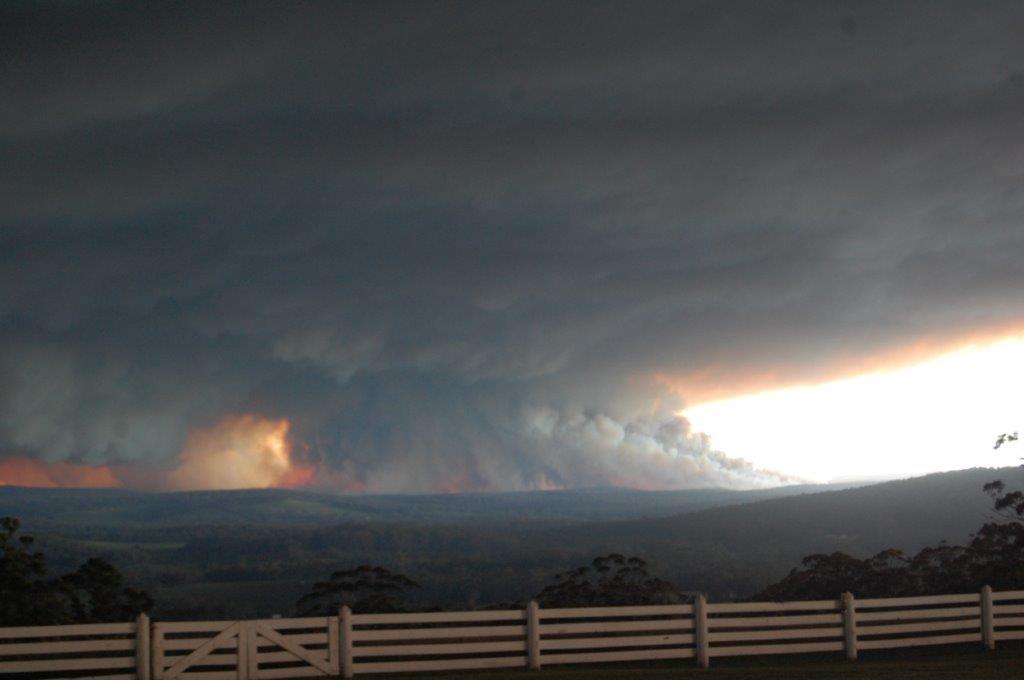
It is becoming more dangerous to undertake prescribed burning and there is a greater likelihood of escape. Numerous prescribed burns have escaped containment boundaries and become dangerous, destructive wildfires.
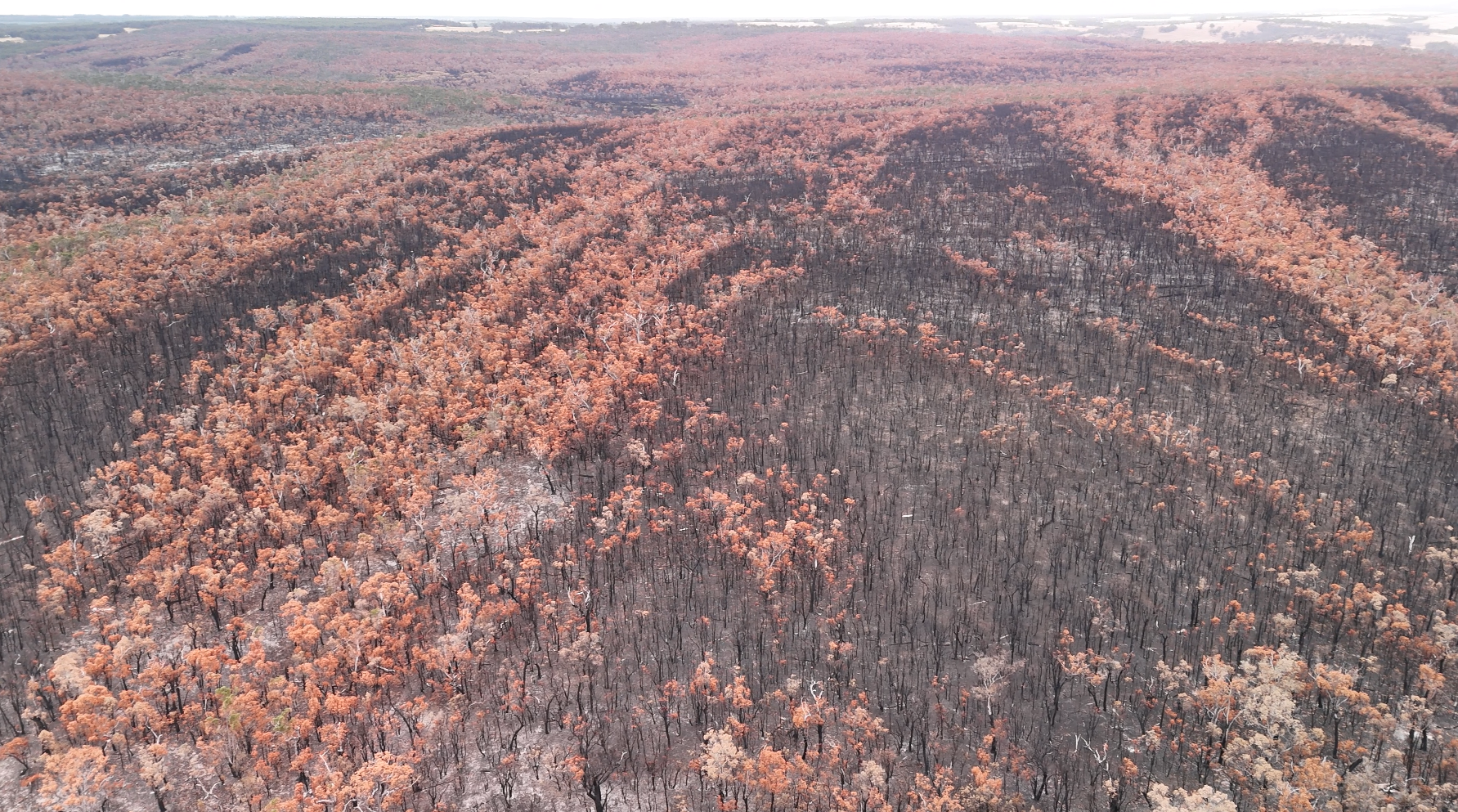
Denbarker, 8,600-hectare prescribed burn undertaken in spring resulting in 98% tree canopy scorch. Mount Lindesay National Park, Denbarker, WA. Photo: November 2019.
Sheepwash prescribed burn, Mt Lindesay National Park. Spring 2024.
Prescribed burns are harmless “cool fires.”
Many prescribed burns are high severity burns and not cool at all causing large tree collapses, extensive crown scorch to canopies and decimating peatlands and other habitats.
Even low-intensity burns can kill wildlife, including threatened species and destroy critical habitat.
Fire severity mapping undertaken by DBCA, researchers and academic institutions is starting to reveal the true severity of many prescribed burns. Lessons can be learned by this from past mistakes.
Animals are not harmed and can escape prescribed burns
DBCA have stated “the typical prescribed burn travels at around 5 km/hour, allowing animals to escape…and the height of the flames generated is low enough for treetop creatures to be unaffected (except by smoke)”. Source: Response to the Standing Committee on Environment and Public Affairs, DBCA, 2022.
Many animals can’t or won't be able to move fast to escape prescribed burns. The majority of prescribed burns are undertaken in spring which is the peak breeding and nesting season for most native animals. Many animals in nests, burrows, logs, trees and tree hollows and less mobile species often have no chance to escape.
In broadscale prescribed burns, aerial incendiaries are dropped over thousands of hectares at a time, setting large areas alight within an hour or two. Animals can find themselves completely surrounded by fire in a short time making it very difficult for them to find escape routes or unburnt areas to take cover in. This method involves burning a perimeter around large blocks of land (“edge burning”), before dropping aerial incendiaries over the entire interior area, essentially "trapping" animals within the interior, until the majority of the area is burnt.
If animals do not perish from the fire, lethal heat, smoke inhalation, abondonment by their parents or subsequent fire-related injuries, they are also at risk of increased predation after the burns.
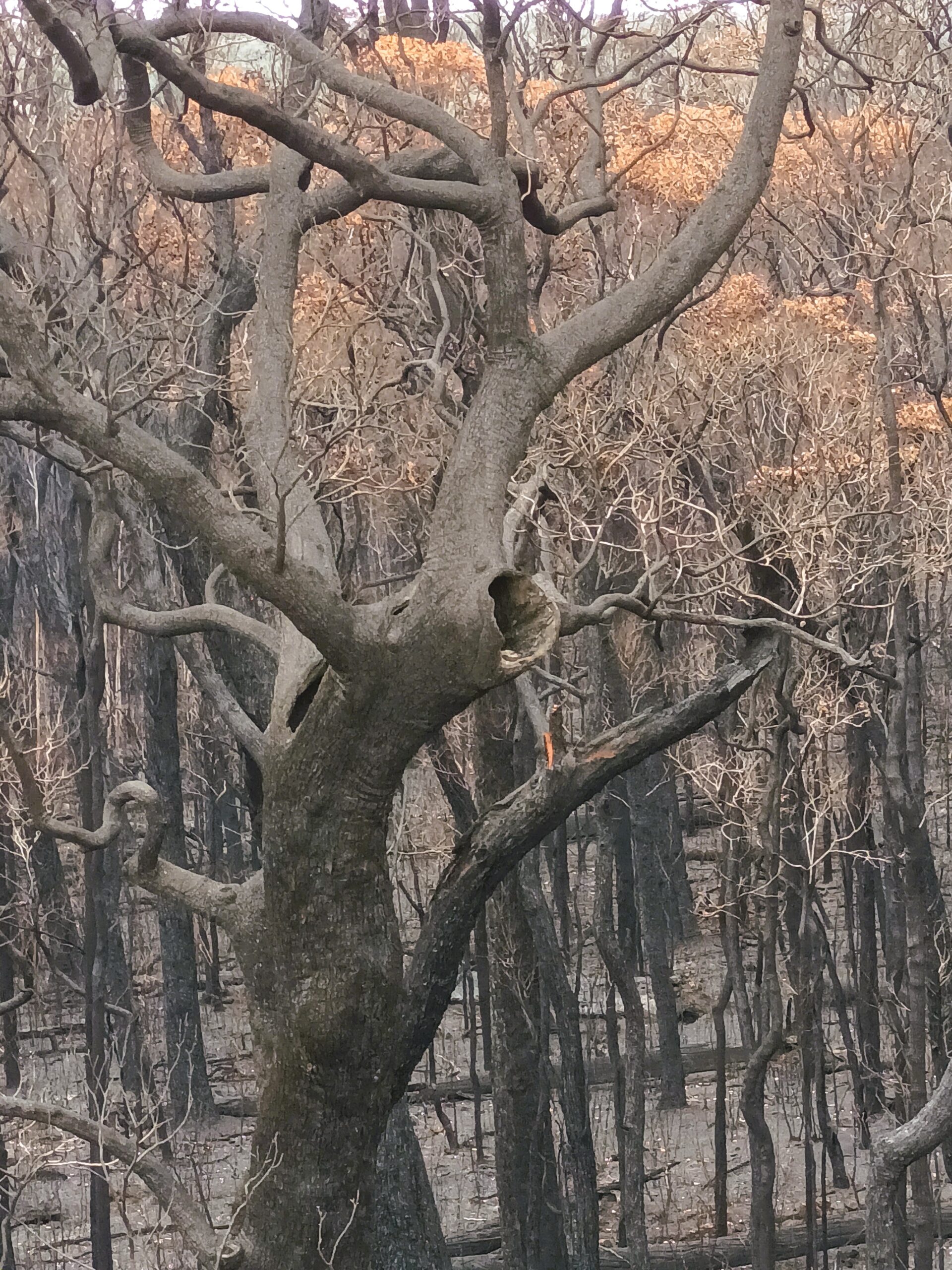
Habitat tree with large hollow in Mitchell block near Mount Frankland burned in the 10,000-hectare Peak-Roe-Crossing prescribed burn escape within Walpole Wilderness Area, North Walpole, WA. Photo: 14th December 2022.
There are no alternatives.
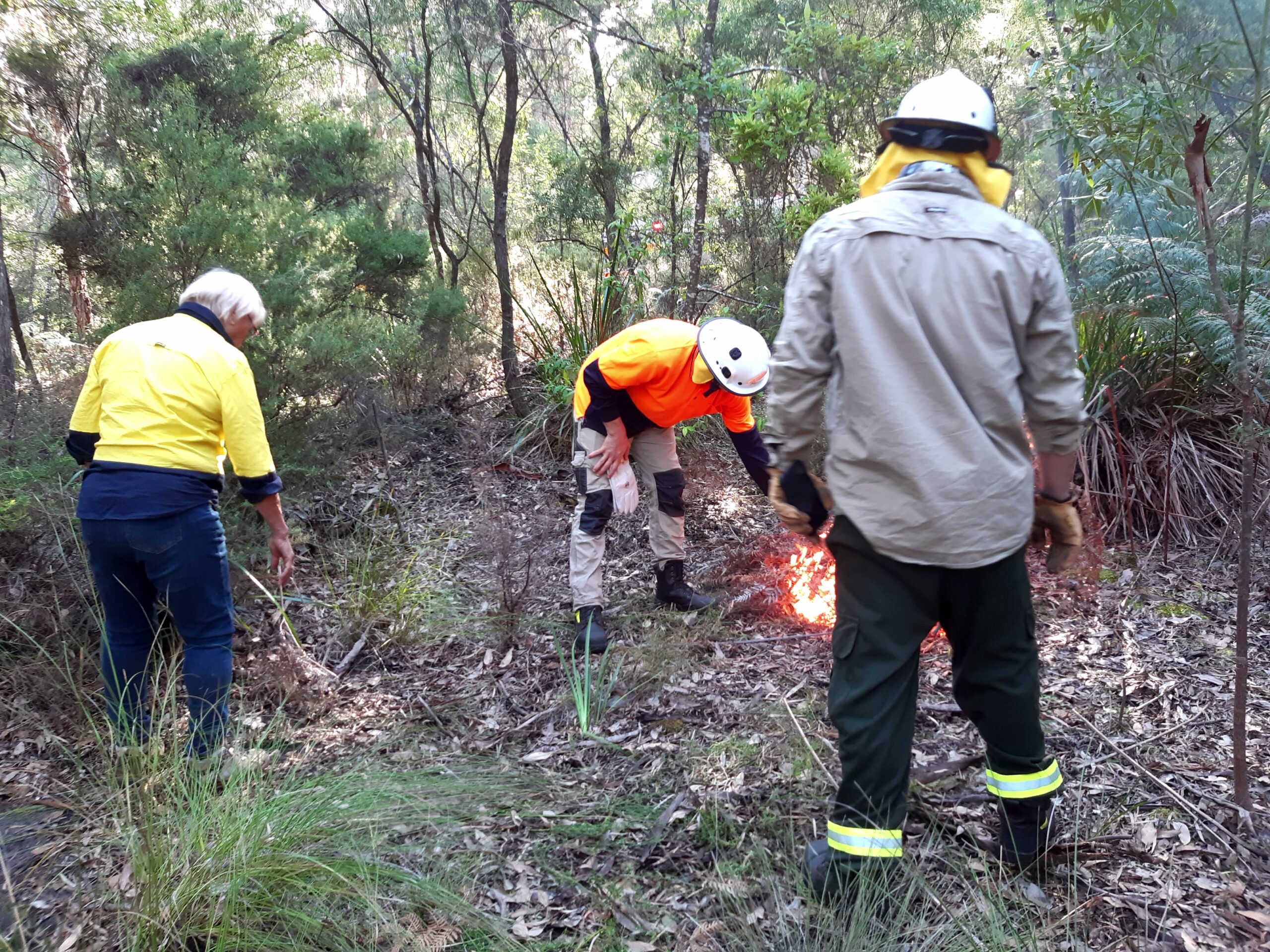
Collaborative small, cool burn with Noongar Elders and Aboriginal Rangers on Wilson Inlet foreshore, Denmark. Photo: 10th May 2022
Traditional Noongar cultural burning was (and still is in some areas) undertaken with precise knowledge of each species, their interactions and requirements with careful consideration of the appropriate seasonality, weather conditions and timing to light them.
The Noongar people had clear objectives to ensure the fires they set were safe and right for the purposes they were required.
DBCA have area targets and set most of their fires in spring which is the peak breeding and nesting season in southwest WA. This is contrary to the Noongar people's fire practices and principles.
Victoria abandoned its 5% annual burn target in 2015 after reviews found it ineffective, replacing it with a risk-based system (Safer Together) (IGEM, 2015).
NSW has always used Bush Fire Risk Management Plans, focusing burns near communities instead of meeting quotas (NSW RFS, 2020).